HALLMARK: Diagnosing Three Failure Modes in LLM Citation Verifiers
Abstract
Large language models (LLMs) now routinely draft literature reviews and assist with academic writing, which means a higher risk of fabricated references: GPTZero found 53 papers with hallucinated citations among NeurIPS 2025’s accepted set. Rule- and LLM-based verifiers are emerging, but no shared benchmark compares them and gives detailed failure diagnostics. We close that gap with HALLMARK (Hallucination benchmark): 2,526 BibTeX entries spanning 14 hallucination types, three difficulty tiers, six diagnostic sub-tests per entry, and a contamination-resistant held-out split. On it we evaluate a DOI-lookup baseline, frontier LLMs zero-shot, tool-augmented agents, and our own rule-based, co-designed verifier bibtex-updater. Across the benchmark one result is consistent: the false-positive rate, not recall, decides whether a verifier is deployable. HALLMARK makes it concrete through three failure modes: agentic lookups buy recall but inflate false positives; at a venue-realistic base rate, the order-of-magnitude spread in false-positive rates (FPRs) – not recall – governs whether a verifier’s flags are mostly true catches or mostly noise; and most LLMs over-flag papers published past their training cutoff, where only the two latest-cutoff models hold their false-positive rate near in-distribution levels (a signal we report as descriptive, since it is confounded with possible recall of those entries). Thus FPR is the deployment bottleneck, but an undetected fabrication remains the costlier error for the scientific record.
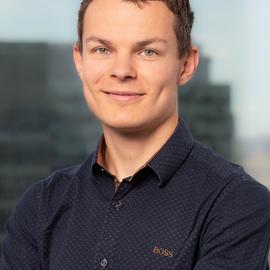
Patrik Reizinger
PhD candidate → MILA
I am a final-year Ph.D. student supervised by Wieland Brendel, Ferenc Huszár, Matthias Bethge, and Bernhard Schölkopf. I am part of the ELLIS and IMPRS-IS programs. I have also spent time at the Vector Institute and at the University of Cambridge.
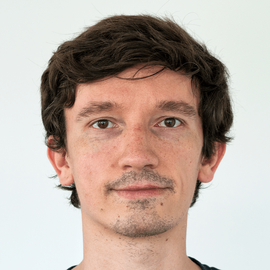
Wieland Brendel
Principal Investigator (PI)
Wieland Brendel received his Diploma in physics from the University of Regensburg (2010) and his Ph.D. in computational neuroscience from the École normale supérieure in Paris (2014). He joined the University of Tübingen as a postdoctoral researcher in the group of Matthias Bethge, became a Principal Investigator and Team Lead in the Tübingen AI Center (2018) and an Emmy Noether Group Leader for Robust Machine Learning (2020). In May 2022, Wieland joined the Max-Planck Institute for Intelligent Systems as an independent Group Leader and is now a Hector-endowed Fellow at the ELLIS Institute Tübingen (since September 2023). He received the 2023 German Pattern Recognition Award for his substantial contributions on robust, generalisable and interpretable machine vision. Aside of his research, Wieland co-founded a nationwide school competition (bw-ki.de) and a machine learning startup focused on visual quality control.