Stabilizing Extrapolation in Looped Transformers via Learned Stochastic Stopping
Abstract
Looped Transformers, which repeatedly apply a shared transformer block, are an architecturally natural fit for variable-length algorithmic tasks. Although they can exhibit strong length generalization beyond the length of training sequences, this behavior is brittle, yielding high out-of-distribution (OOD) variance, even across well-performing in-distribution solutions. We trace this variance to the spurious correlation in simple algorithmic tasks between sequence length and number of loops. Introducing stochasticity into the number of loops during training sharply reduces OOD variance and stabilizes predictions across inference-time loop counts. To improve upon heuristic randomization schemes, we further analyze RL-Halting as a learned stochastic schedule and find that it generally improves the accuracy-stability trade-off. Across binary addition, Dyck-1, Unique Set, and Copy, learned stochastic stopping often improves this trade-off but can also stabilize a suboptimal computation. Our work suggests that ‘when to stop’ should be treated as a training-time design choice, not merely an inference-time computation-allocation rule.
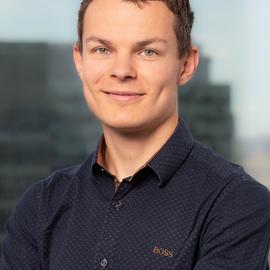
Patrik Reizinger
PhD candidate → MILA
I am a final-year Ph.D. student supervised by Wieland Brendel, Ferenc Huszár, Matthias Bethge, and Bernhard Schölkopf. I am part of the ELLIS and IMPRS-IS programs. I have also spent time at the Vector Institute and at the University of Cambridge.
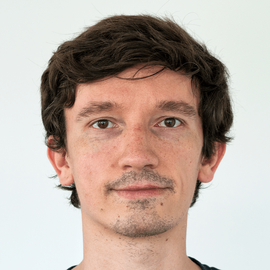
Wieland Brendel
Principal Investigator (PI)
Wieland Brendel received his Diploma in physics from the University of Regensburg (2010) and his Ph.D. in computational neuroscience from the École normale supérieure in Paris (2014). He joined the University of Tübingen as a postdoctoral researcher in the group of Matthias Bethge, became a Principal Investigator and Team Lead in the Tübingen AI Center (2018) and an Emmy Noether Group Leader for Robust Machine Learning (2020). In May 2022, Wieland joined the Max-Planck Institute for Intelligent Systems as an independent Group Leader and is now a Hector-endowed Fellow at the ELLIS Institute Tübingen (since September 2023). He received the 2023 German Pattern Recognition Award for his substantial contributions on robust, generalisable and interpretable machine vision. Aside of his research, Wieland co-founded a nationwide school competition (bw-ki.de) and a machine learning startup focused on visual quality control.