Causality is Key for Interpretability Claims to Generalise
Abstract
Interpretability research on large language models (LLMs) has yielded important insights into model behaviour, yet recurring pitfalls persist: findings that do not generalise, and causal interpretations that outrun the evidence. Our position is that causal inference specifies what constitutes a valid mapping from model activations to invariant high-level structures, the data or assumptions needed to achieve it, and the inferences it can support. Specifically, Pearl’s causal hierarchy clarifies what an interpretability study can justify. Observations establish associations between model behaviour and internal components. Interventions (e.g., ablations or activation patching) support claims how these edits affect a behavioural metric (e.g., average change in token probabilities) over a set of prompts. However, counterfactual claims – i.e., asking what the model output would have been for the same prompt under an unobserved intervention – remain largely unverifiable without controlled supervision. We show how causal representation learning (CRL) operationalises this hierarchy, specifying which variables are recoverable from activations and under what assumptions. Together, these motivate a diagnostic framework that helps practitioners select methods and evaluations matching claims to evidence such that findings generalise.
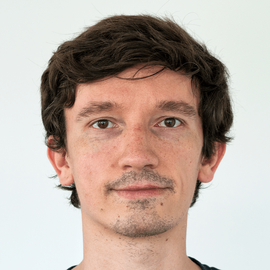
Wieland Brendel
Principal Investigator (PI)
Wieland Brendel received his Diploma in physics from the University of Regensburg (2010) and his Ph.D. in computational neuroscience from the École normale supérieure in Paris (2014). He joined the University of Tübingen as a postdoctoral researcher in the group of Matthias Bethge, became a Principal Investigator and Team Lead in the Tübingen AI Center (2018) and an Emmy Noether Group Leader for Robust Machine Learning (2020). In May 2022, Wieland joined the Max-Planck Institute for Intelligent Systems as an independent Group Leader and is now a Hector-endowed Fellow at the ELLIS Institute Tübingen (since September 2023). He received the 2023 German Pattern Recognition Award for his substantial contributions on robust, generalisable and interpretable machine vision. Aside of his research, Wieland co-founded a nationwide school competition (bw-ki.de) and a machine learning startup focused on visual quality control.
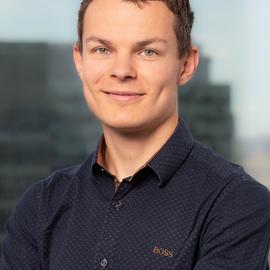
Patrik Reizinger
PhD candidate → MILA
I am a final-year Ph.D. student supervised by Wieland Brendel, Ferenc Huszár, Matthias Bethge, and Bernhard Schölkopf. I am part of the ELLIS and IMPRS-IS programs. I have also spent time at the Vector Institute and at the University of Cambridge.