VGGSounder: Audio-Visual Evaluations for Foundation Models
Abstract
The emergence of audio-visual foundation models underscores the importance of reliably assessing their multi-modal understanding. The VGGSound dataset is commonly used as a benchmark for evaluation audio-visual classification. However, our analysis identifies several limitations of VGGSound, including incomplete labelling, partially overlapping classes, and misaligned modalities. These lead to distorted evaluations of auditory and visual capabilities. To address these limitations, we introduce VGGSounder, a comprehensively re-annotated, multi-label test set that extends VGGSound and is specifically designed to evaluate audio-visual foundation models. VGGSounder features detailed modality annotations, enabling precise analyses of modality-specific performance. Furthermore, we reveal model limitations by analysing performance degradation when adding another input modality with our new modality confusion metric.
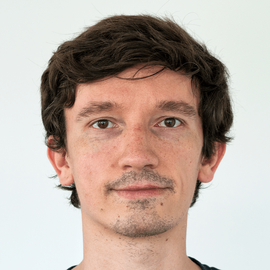
Wieland Brendel
Principal Investigator (PI)
Wieland Brendel received his Diploma in physics from the University of Regensburg (2010) and his Ph.D. in computational neuroscience from the École normale supérieure in Paris (2014). He joined the University of Tübingen as a postdoctoral researcher in the group of Matthias Bethge, became a Principal Investigator and Team Lead in the Tübingen AI Center (2018) and an Emmy Noether Group Leader for Robust Machine Learning (2020). In May 2022, Wieland joined the Max-Planck Institute for Intelligent Systems as an independent Group Leader and is now a Hector-endowed Fellow at the ELLIS Institute Tübingen (since September 2023). He received the 2023 German Pattern Recognition Award for his substantial contributions on robust, generalisable and interpretable machine vision. Aside of his research, Wieland co-founded a nationwide school competition (bw-ki.de) and a machine learning startup focused on visual quality control.