Estimating Treatment Effects with Independent Component Analysis
Abstract
Independent Component Analysis (ICA) uses a measure of non-Gaussianity to identify latent sources from data and estimate their mixing coefficients (Shimizu et al., 2006). Meanwhile, higher-order Orthogonal Machine Learning (OML) exploits non-Gaussian treatment noise to provide more accurate estimates of treatment effects in the presence of confounding nuisance effects (Mackey et al., 2018). Remarkably, we find that the two approaches rely on the same moment conditions for consistent estimation. We then seize upon this connection to show how ICA can be effectively used for treatment effect estimation. Specifically, we prove that linear ICA can consistently estimate multiple treatment effects, even in the presence of Gaussian confounders, and identify regimes in which ICA is provably more sample-efficient than OML for treatment effect estimation. Our synthetic demand estimation experiments confirm this theory and demonstrate that linear ICA can accurately estimate treatment effects even in the presence of nonlinear nuisance.
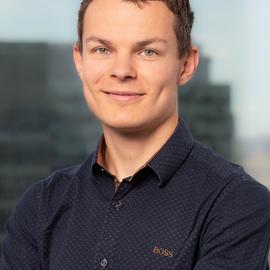
Patrik Reizinger
PhD candidate → MILA
I am a final-year Ph.D. student supervised by Wieland Brendel, Ferenc Huszár, Matthias Bethge, and Bernhard Schölkopf. I am part of the ELLIS and IMPRS-IS programs. I have also spent time at the Vector Institute and at the University of Cambridge.
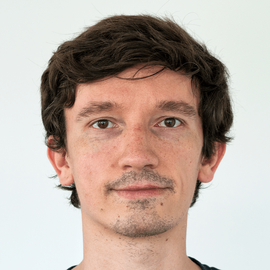
Wieland Brendel
Principal Investigator (PI)
Wieland Brendel received his Diploma in physics from the University of Regensburg (2010) and his Ph.D. in computational neuroscience from the École normale supérieure in Paris (2014). He joined the University of Tübingen as a postdoctoral researcher in the group of Matthias Bethge, became a Principal Investigator and Team Lead in the Tübingen AI Center (2018) and an Emmy Noether Group Leader for Robust Machine Learning (2020). In May 2022, Wieland joined the Max-Planck Institute for Intelligent Systems as an independent Group Leader and is now a Hector-endowed Fellow at the ELLIS Institute Tübingen (since September 2023). He received the 2023 German Pattern Recognition Award for his substantial contributions on robust, generalisable and interpretable machine vision. Aside of his research, Wieland co-founded a nationwide school competition (bw-ki.de) and a machine learning startup focused on visual quality control.