Skill Learning via Policy Diversity Yields Identifiable Representations for Reinforcement Learning
Abstract
Self-supervised feature learning and pretraining methods in reinforcement learning (RL) often rely on information-theoretic principles, termed mutual information skill learning (MISL). These methods aim to learn a representation of the environment while also incentivizing exploration thereof. However, the role of the representation and mutual information parametrization in MISL is not yet well understood theoretically. Our work investigates MISL through the lens of identifiable representation learning by focusing on the Contrastive Successor Features (CSF) method. We prove that CSF can provably recover the environment’s ground-truth features up to a linear transformation due to the inner product parametrization of the features and skill diversity in a discriminative sense. This first identifiability guarantee for representation learning in RL also helps explain the implications of different mutual information objectives and the downsides of entropy regularizers. We empirically validate our claims in MuJoCo and DeepMind Control and show how CSF provably recovers the ground-truth features both from states and pixels.
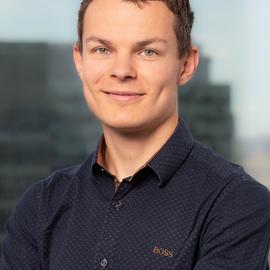
Patrik Reizinger
PhD candidate → MILA
I am a final-year Ph.D. student supervised by Wieland Brendel, Ferenc Huszár, Matthias Bethge, and Bernhard Schölkopf. I am part of the ELLIS and IMPRS-IS programs. I have also spent time at the Vector Institute and at the University of Cambridge.
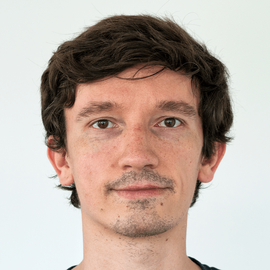
Wieland Brendel
Principal Investigator (PI)
Wieland Brendel received his Diploma in physics from the University of Regensburg (2010) and his Ph.D. in computational neuroscience from the École normale supérieure in Paris (2014). He joined the University of Tübingen as a postdoctoral researcher in the group of Matthias Bethge, became a Principal Investigator and Team Lead in the Tübingen AI Center (2018) and an Emmy Noether Group Leader for Robust Machine Learning (2020). In May 2022, Wieland joined the Max-Planck Institute for Intelligent Systems as an independent Group Leader and is now a Hector-endowed Fellow at the ELLIS Institute Tübingen (since September 2023). He received the 2023 German Pattern Recognition Award for his substantial contributions on robust, generalisable and interpretable machine vision. Aside of his research, Wieland co-founded a nationwide school competition (bw-ki.de) and a machine learning startup focused on visual quality control.